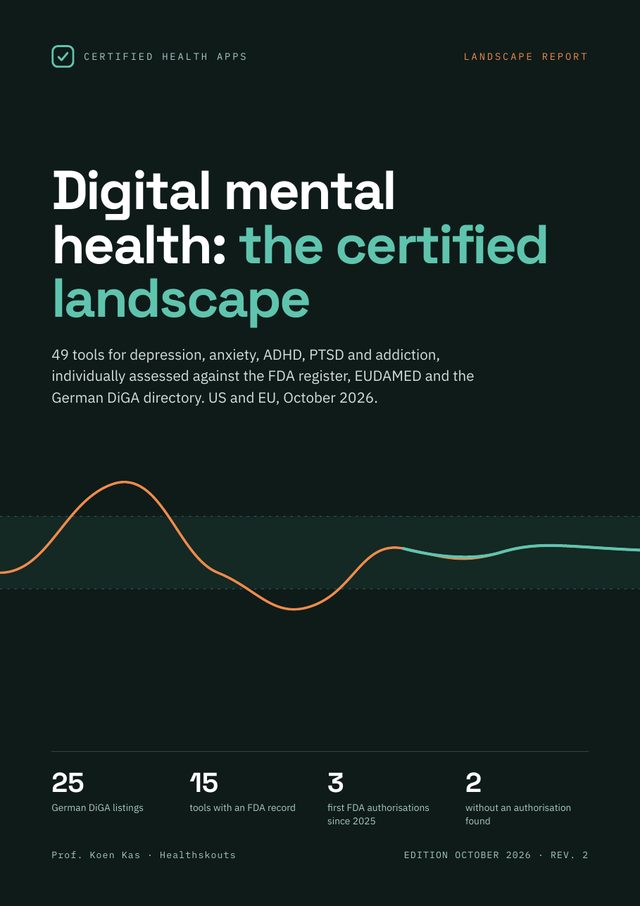
Digital mental health: the certified landscape 2026
German DiGA therapies, US prescription apps and neuromodulation devices: 49 digital mental health tools individually assessed against the FDA register, EUDAMED and the German DiGA directory.
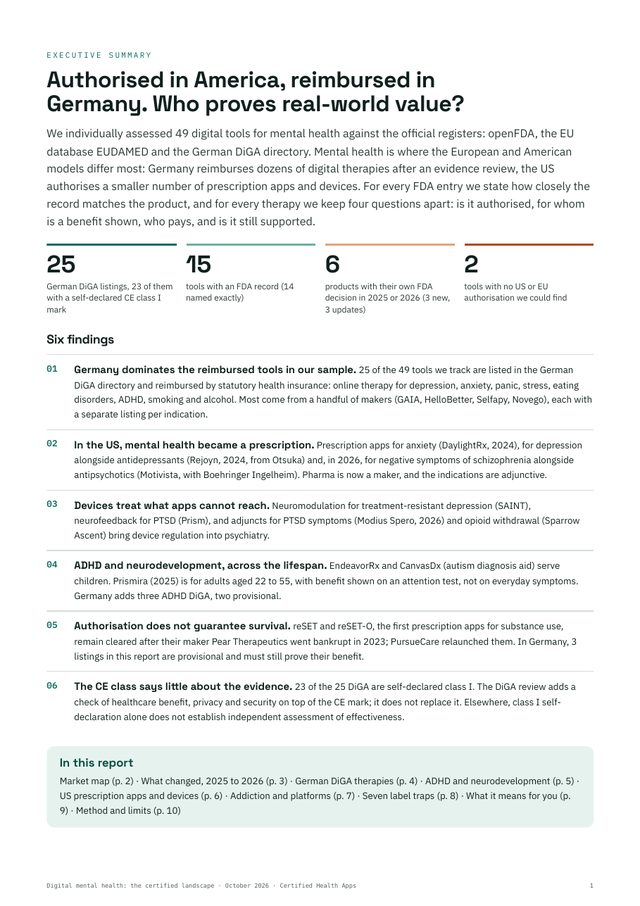
Six findings
- Germany dominates the reimbursed tools in our sample. 25 of the 49 tools we track are listed in the German DiGA directory and reimbursed by statutory health insurance: online therapy for depression, anxiety, panic, stress, eating disorders, ADHD, smoking and alcohol.
- In the US, mental health became a prescription. Prescription apps for anxiety (DaylightRx, 2024), for depression alongside antidepressants (Rejoyn, 2024, from Otsuka) and, in 2026, for negative symptoms of schizophrenia alongside antipsychotics (Motivista, with Boehringer Ingelheim).
- Devices treat what apps cannot reach. Neuromodulation for treatment-resistant depression (SAINT), neurofeedback for PTSD (Prism), and adjuncts for PTSD symptoms (Modius Spero, 2026) and opioid withdrawal (Sparrow Ascent) bring device regulation into psychiatry.
- ADHD and neurodevelopment, across the lifespan. EndeavorRx and CanvasDx (autism diagnosis aid) serve children.
- Authorisation does not guarantee survival. reSET and reSET-O, the first prescription apps for substance use, remain cleared after their maker Pear Therapeutics went bankrupt in 2023; PursueCare relaunched them.
- The CE class says little about the evidence. 23 of the 25 DiGA are self-declared class I.
Inside the report
- Executive summary and six findings
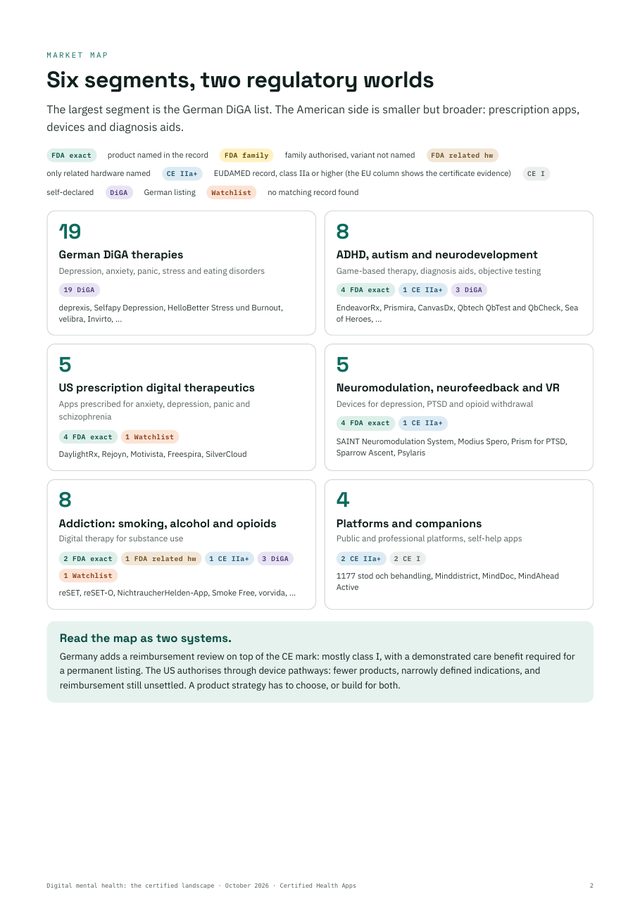
- Six segments, two regulatory worlds: the market map
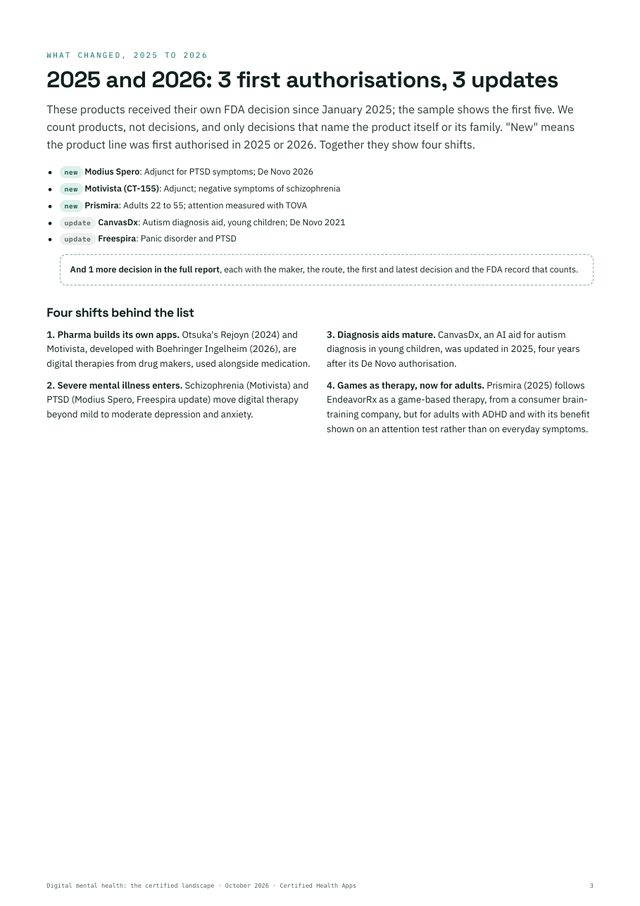
- What changed in 2025 and 2026: 3 first authorisations, 3 updates
- Six segment tables (German DiGA therapies; ADHD, autism and neurodevelopment; US prescription digital therapeutics; Neuromodulation, neurofeedback and VR; Addiction: smoking, alcohol and opioids; Platforms and companions) with FDA route, first and latest decision, reference numbers and verification level for every tool, plus EU class, notified body certificate evidence from EUDAMED and DiGA status
- Seven ways a mental health label can mislead
- What it means for pharma, insurers, care providers and primary care
- Method, verification levels and counting rules
What the full report adds to the free directory
Our free directory shows which tools are certified. The report shows the proof, and what it means.
- Evidence for every tool. The FDA record number, whether that record names this exact product, only its product family or only related hardware, the first and latest decision, and the notified body certificate evidence visible in EUDAMED. None of this is in the directory.
- What it means. The findings, the label traps, the white spaces in the market, and what the landscape means for pharma, payers, hospitals and clinicians.
- A document you can defend. Dated, externally reviewed and citeable in a strategy or procurement file. The organisation licence adds the Excel data file and the right to share it internally.
Order the full report
The full report (PDF, 12 pages) for one reader, personalised with your name and email on every page. For your own use, not for sharing.
Buy nowThe full report without personal marking, to share across your organisation, on your intranet and in internal presentations. Plus the Excel data file with all 49 tools, their FDA and EU references and certificate details, and an updated edition after six months.
Buy nowEverything in the organisation licence, plus a one-hour briefing with Prof. Koen Kas for your team on what the landscape means for your strategy.
Request